
When an athlete is just starting their Name, Image, and Likeness (NIL) journey, it is easy to think they need a huge following, a perfectly built social media page, or a major brand to take them seriously. Seeing athletes land big partnerships and post sponsorship deals can make the process feel intimidating, especially for athletes at smaller schools or located in smaller towns. That pressure alone can make NIL feel harder than it needs to be.
Many local business owners already support the sports programs within their community, whether through sponsorships, attending games, or simply wanting to see local athletes succeed. Partnering with an athlete can feel like a natural extension of that support. Local businesses often have a stronger vested interest in helping athletes from their own town or nearby college grow. In smaller towns, athletes are often some of the most recognizable people in the community. Their games are followed, their accomplishments are discussed, and their social media content is seen by classmates, parents, alumni, teammates, and local supporters. When an athlete promotes a local business to an audience that already knows and trusts them, it can create meaningful exposure that helps businesses attract customers and strengthen their connection to the community.
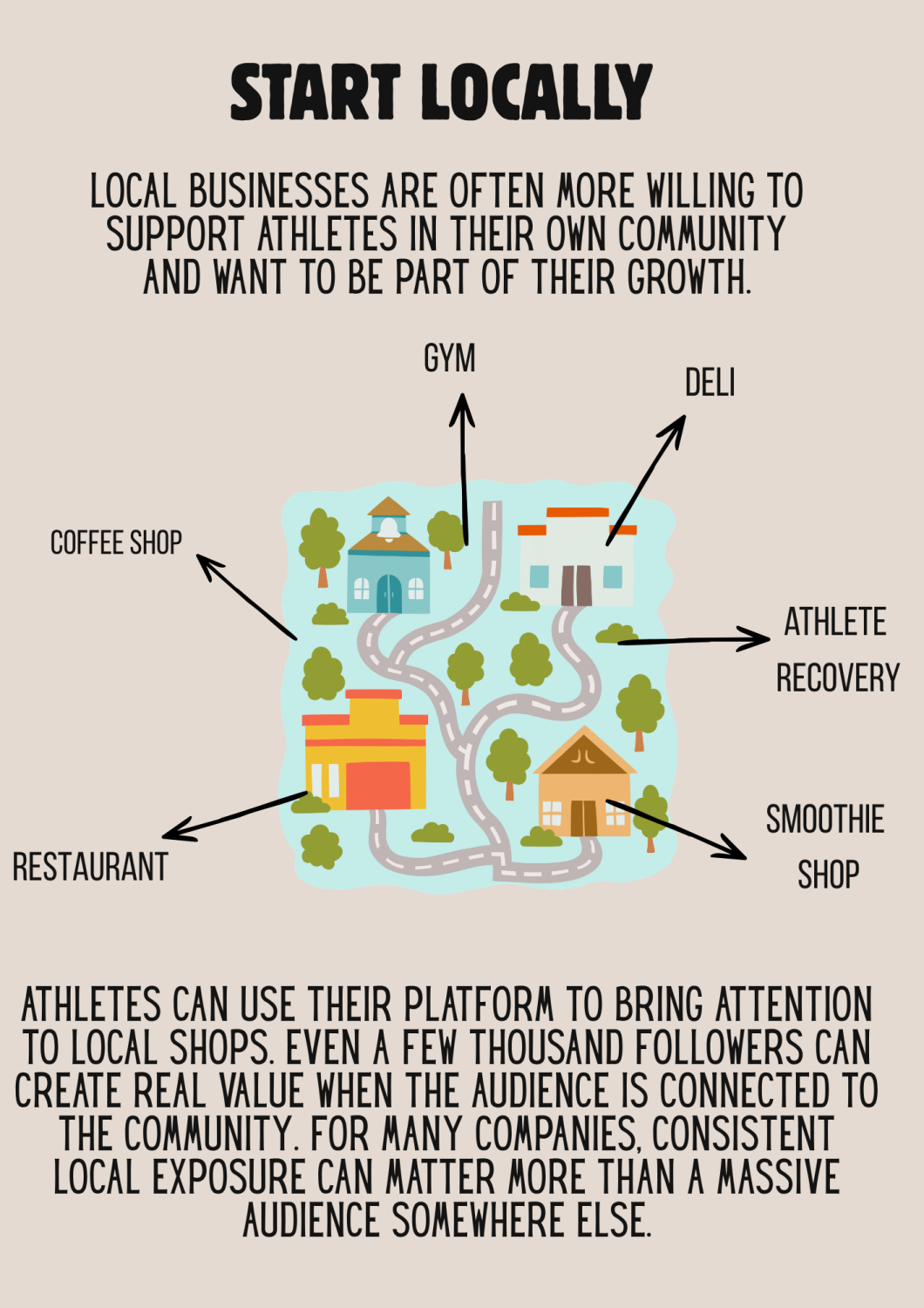
One of the biggest misunderstandings around NIL is the belief that follower count alone determines value. A strong local audience can sometimes be far more useful to a business than a larger audience scattered across multiple states. If classmates, teammates, parents, and community members regularly engage with an athlete’s content, that attention can matter greatly to a neighborhood restaurant, local gym, coffee shop, or retail store. Consistent engagement, recognizable connections, and an audience concentrated in the same area can all become meaningful selling points.
Athletes do not need to begin with a paid deal. A free meal, discounted training sessions, products, and apparel can still provide significant value. Early partnerships are often less about maximizing income and more about learning how the NIL space works. Those first conversations help athletes become more comfortable speaking with owners about presenting ideas, negotiating, following up, and delivering on commitments.
After a few partnerships, athletes begin to understand their audience more clearly. They learn which content performs well, how people respond to their videos, and the type of results they generate for businesses. Those analytics become extremely useful when they start to approach larger companies.
Pitching national brands with experience and concrete data is very different from simply hoping a business will take a chance and say yes. Instead of sending a generic message asking for a deal, athletes can explain their audience demographics, engagement trends, successful campaigns, and previous collaborations. That preparation creates a much stronger and far more professional approach.
Ultimately, an athlete does not need a national brand, a massive following, or a perfect strategy to begin building their NIL journey. Developing relationships within their own community can provide practical experience, clearer direction, and a stronger understanding of how to communicate their value. Starting local is not thinking small. It is often one of the smartest ways for athletes to build a foundation that prepares them for larger opportunities in the future.