Most people believe a trademark application gets rejected only when two names are exactly the same. The trademark process is more complex than that. Applications are often refused because the names are considered too similar, which could confuse consumers. This concept is known as likelihood of confusion, and it is one of the most common reasons trademark applications are denied.
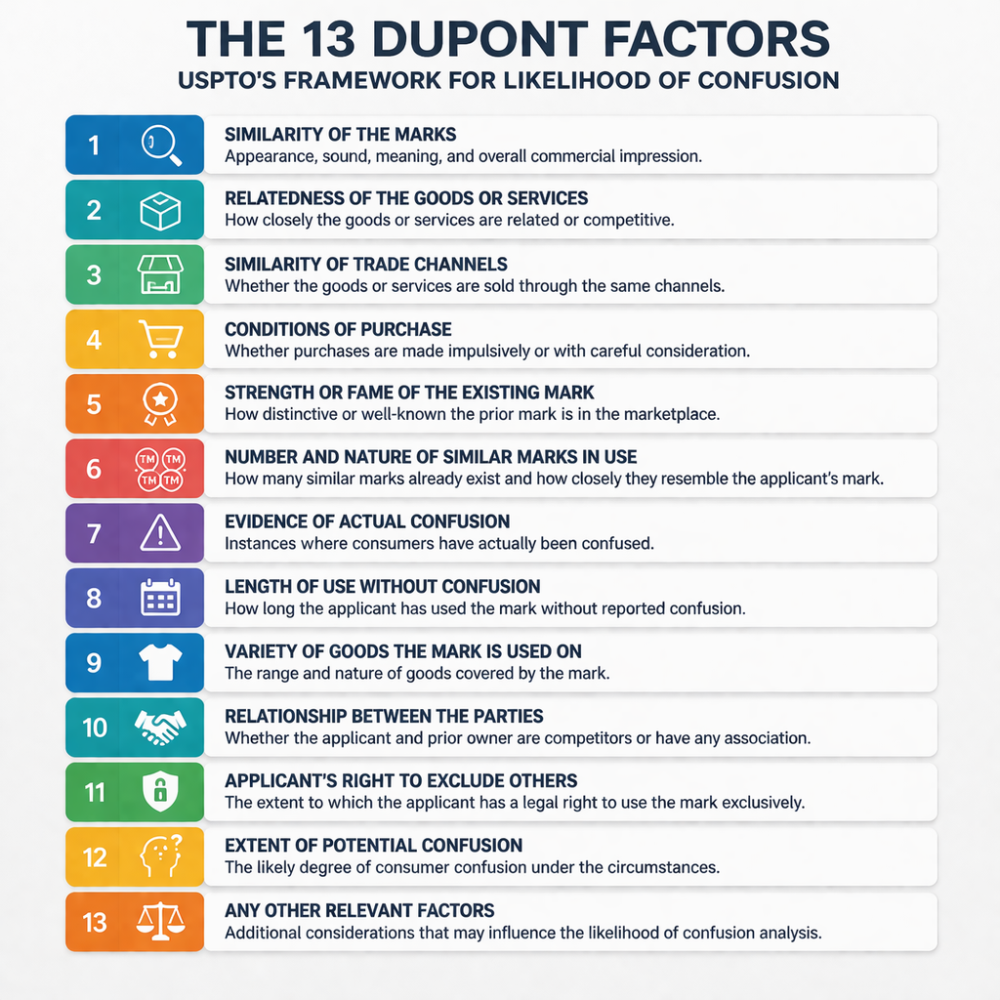
The USPTO does not compare names side by side the way you might expect. Instead, it looks at how an average consumer would remember the name. If someone comes across both brands and thinks they are connected, that is enough to create an issue. To make this determination, the United States Patent and Trademark Office (USPTO) use a framework known as the DuPont factors:
- Similarity of the marks (appearance, sound, meaning, overall impression)
- Relatedness of the goods or services
- Similarity of trade channels
- Conditions of purchase (impulse vs. careful buying)
- Strength or fame of the existing mark
- Number and nature of similar marks already in use
- Evidence of actual confusion
- Length of use without confusion
- Variety of goods the mark is used on
- Relationship between the parties
- Applicant’s right to exclude others
- Extent of potential confusion
- Any other relevant factors
Not every factor applies in every case, and in most situations, the analysis comes down to how similar the marks are and how related the goods or services are.
One of the most important considerations is the similarity of the marks themselves. This includes how the names look, how they sound when spoken, and the overall impression they create. Even small differences in spelling often do not matter if the names sound alike or carry a similar meaning.
Another key factor is how related the goods or services are. If two businesses operate in similar industries or offer related products, the likelihood of confusion increases. Identical names may be allowed in completely different industries, but similar names in the same space are much more likely to conflict. The closer the industries, the higher the risk.
Avoiding these issues starts with choosing a strong and distinctive name. Unique or unexpected names are easier to protect, while descriptive names are more likely to run into problems. Similar sounds, meanings, and overall impressions can still create conflicts, which is why a proper trademark search is one of the most important steps in the process.
Likelihood of confusion is not about copying another brand. It is about whether consumers might believe two brands are connected. Understanding this early can help you avoid rebranding, legal issues, and unnecessary costs. Taking the time to get it right from the beginning can save significant time and frustration later on.