The NCAA recently approved one of the biggest changes to college athletics by adopting a new five-year, age-based eligibility model. As the college athletics landscape continues to evolve, learning how this new rule works will help families make more informed decisions throughout the recruiting process and better prepare for their future.
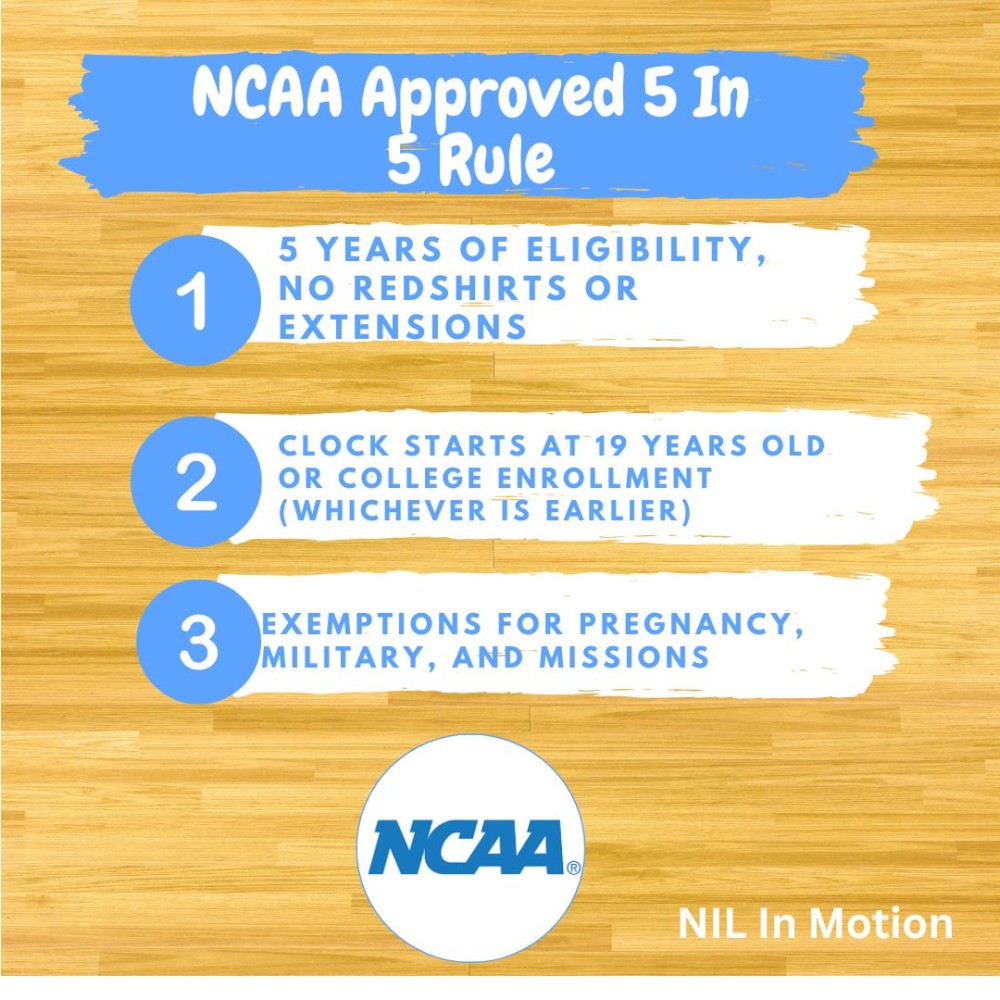
Once an athlete's eligibility clock begins, they will have five years to compete in five seasons. The eligibility clock starts when an athlete first enrolls as a full-time college student or at the beginning of the academic year following their 19th birthday, whichever comes first.
For most athletes, this means there is no longer a need to worry about preserving a season through a traditional redshirt. Once the eligibility clock starts, it continues to run, giving athletes a clearly defined five-year window to use all five seasons of competition.
This rule applies across all NCAA Division I sports, creating a more consistent eligibility model for student-athletes.
Limited Exceptions
The NCAA approved a few specific situations where an athlete's eligibility clock may be extended. Those exceptions include:
- Pregnancy
- Active military service
- Religious mission trips
Outside of these circumstances, families should expect the five-year eligibility clock to continue running.
Frequently Asked Questions
When does my athlete's eligibility clock start?
An athlete's five-year eligibility clock begins when they first enroll as a full-time college student or at the beginning of the academic year following their 19th birthday, whichever occurs first.
Can my athlete still redshirt?
Under this new model, the traditional redshirt is effectively eliminated. Athletes no longer preserve an additional season simply by sitting out a year.
What if my athlete gets injured?
Unlike the previous eligibility system, injuries generally will not create an additional season of eligibility. The NCAA's approved exceptions are limited to pregnancy, active military service, and religious mission trips.
Does this rule apply to every NCAA athlete?
The rule has been approved for NCAA Division I athletics. Transition provisions may apply to some current student-athletes depending on their eligibility status when the rule takes effect.