
The NCAA recently approved one of the biggest eligibility changes in college sports by adopting a new age-based eligibility model for Division I athletes. While many people understand that athletes now have a five-year eligibility window, one part of the rule continues to confuse families…
What is the cutoff date when a player turns 19?
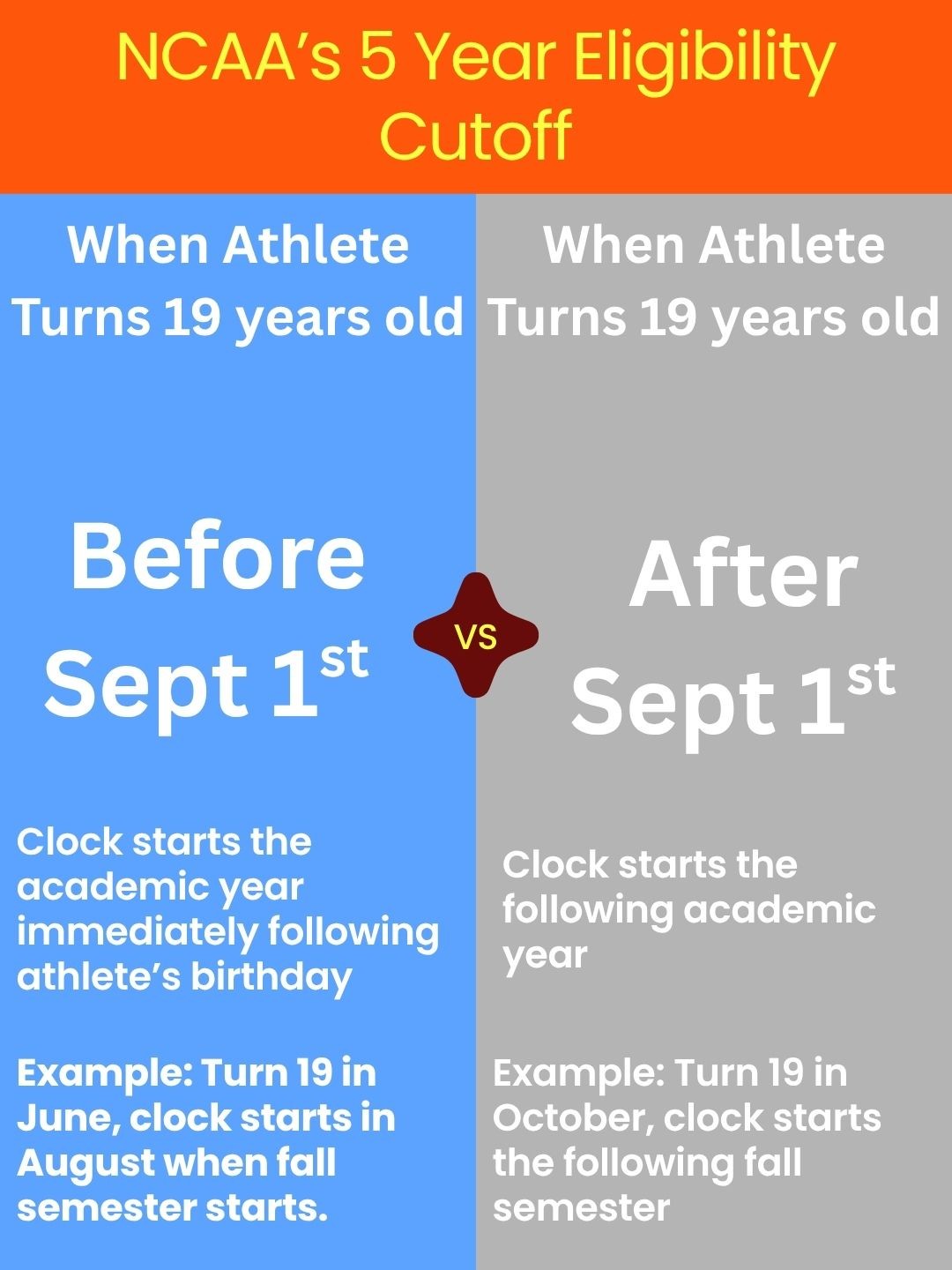
The key date to remember is September 1.
If an athlete turns 19 before September 1, their five-year Division I eligibility clock begins with that upcoming academic year.
Example: An athlete turns 19 on August 20, 2028, their eligibility clock begins in the 2028-29 academic year, even if they have not yet enrolled in college.
If an athlete turns 19 on or after September 1, their eligibility clock does not begin immediately. Instead, it starts with the following academic year.
Example: An athlete turns 19 on October 15, 2028. Their eligibility clock does not begin until the start of the 2029-30 academic year.
This is especially important for families to consider:
- Repeating a grade.
- Taking a postgraduate or prep school year.
- Delaying college enrollment.
A decision that seems harmless today could impact an athlete's Division I eligibility years later. Understanding when the eligibility clock begins helps families plan ahead and avoid unexpected eligibility issues down the road.
Does This Rule Apply to Every NCAA Division?
No.
The new age-based five-year eligibility model is currently only a Division I rule. Division II and Division III continue to operate under their own eligibility legislation and have not adopted this age-based system.
Division II
If you play at a Division II institution, you have the first 10 semesters in which you are enrolled as a full-time student to complete your four seasons of competition.
Division III
Division 3 does not have a five-year clock but limits participation to four seasons.